
 Rankblocks
Best AI tool for SEO content writing: ranked by use case

Most roundups rank AI writing tools by price or word output. That misses the point. The real question is which tool does the specific job you need done today.
Buying behavior shifted. People now ask ChatGPT, Perplexity, and Google AI Overviews before they scroll ten blue links. Your content has to win there and in Google at the same time. Website traffic from AI search engines grew 16x from 2024 to 2026, according to SE Ranking's analysis of over 100,000 sites.
This list ranks the best AI tool for SEO content writing by use case, not features. We cover classic SEO writing, gap closing, AI citation winning, and full workflow. It is built for content and growth marketers who own organic KPIs with no extra headcount. We picked each tool on workflow coverage, AI-citation readiness, Google ranking signals, and time saved per article.
What the best AI SEO content writing tools actually do differently
Any AI writer can generate text. The best AI for SEO content writing optimizes for search intent and AI citations, not just word count.
That second part matters more every month. AEO, or Answer Engine Optimization, structures your content so ChatGPT, Perplexity, and Google AI Overviews can cite it directly. Standard AI writers ignore that entirely.
SEO, AEO, and GEO overlap. The same well-structured, authoritative article that ranks in Google also earns AI mentions. Treating them as separate disciplines wastes budget and slows you down.
We judged every tool in this roundup on five criteria.
- Citation tracking across ChatGPT, Claude, Gemini, and Perplexity
- Brand voice so drafts need light editing, not a rewrite
- Publishing workflow straight to your site
- Content gap analysis to target real traffic demand
- Rank measurement to prove Google positions moved
Here is the trap. A tool that writes but never measures leaves you guessing on ROI. You publish, you hope, you report nothing solid up the chain. That gap is exactly what this list solves.
Top 6 AI tools for SEO content writing, ranked by use case
Each tool below fits a different job. Read the "best for" line, match it to your bottleneck, and move on. Rankblocks leads because it covers the full loop, not because it writes prettier sentences.
Rankblocks, best for full-workflow AEO plus SEO in one platform
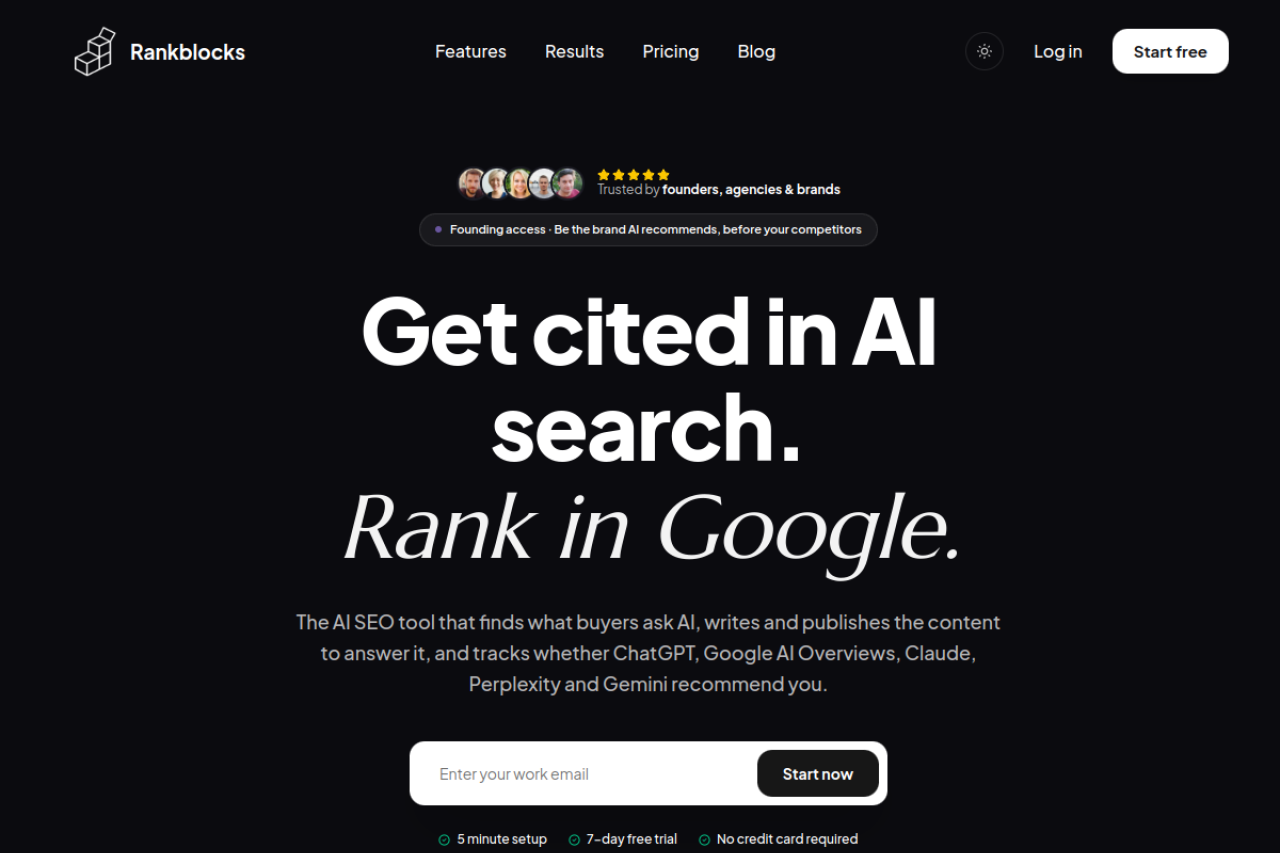
Rankblocks handles research, writing, publishing, and measurement in one place. The AI Content Writing Engine writes in your brand voice and publishes straight to your site, built to win citations and rank in Google.
The AI Visibility Monitor tracks your brand mentions and citations across ChatGPT, Claude, Gemini, and Perplexity. You see which buying questions surface your brand versus a competitor, so you know where you win.
The Content Gap Analysis surfaces high-traffic topics your competitors rank for and you do not. The Keyword Rank Tracker and Live Search Console Dashboard close the measurement loop, so no publish is a guess.
Best for: teams who need to research, write, publish, and track AI citations without switching tools or paying an agency retainer.
Surfer SEO, best for real-time on-page optimization guidance
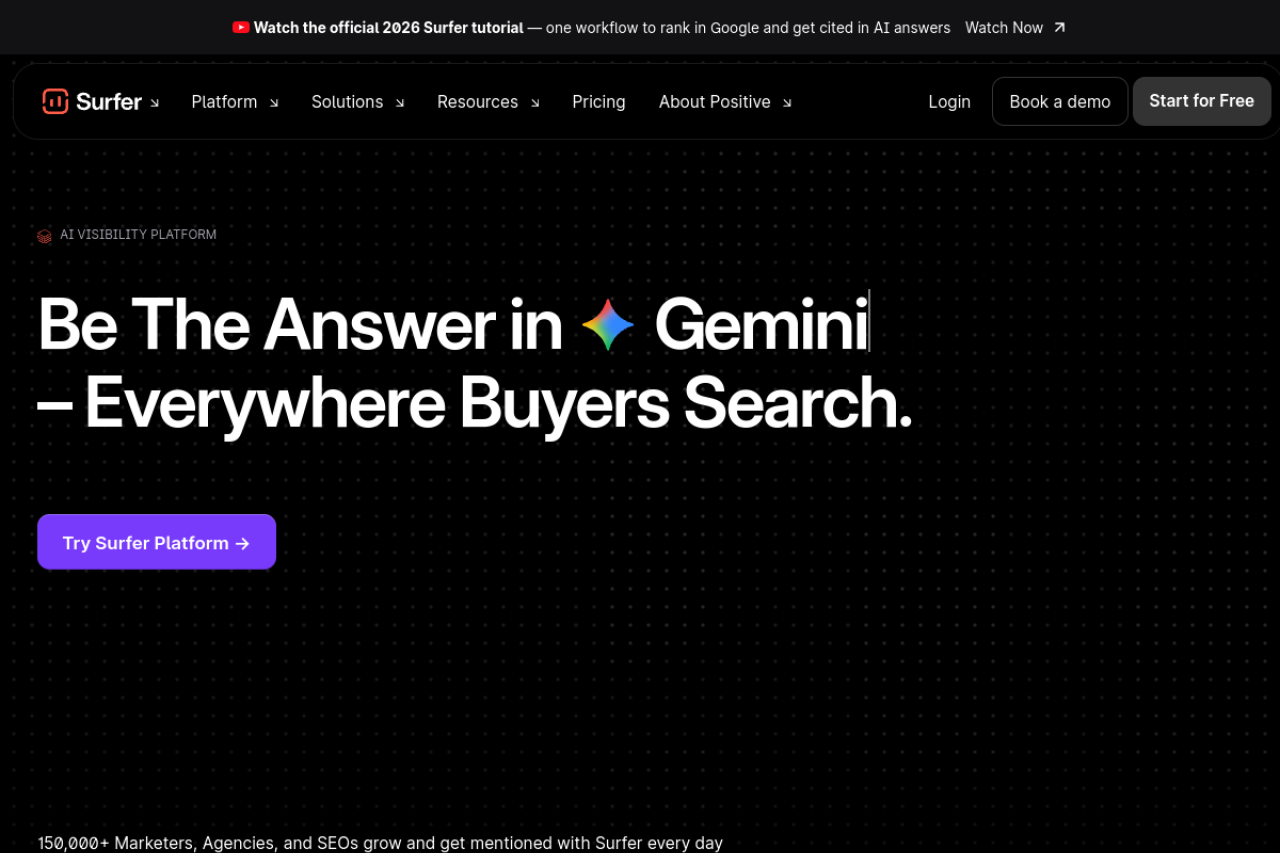
Surfer scores your draft against top-ranking pages as you write. The content editor gives you term coverage, structure, and length targets in real time.
Its Google-ranking signals are strong. Surfer added GEO tracking, but that stays secondary to its core on-page use case.
Best for: teams with dedicated writers who want live SEO scoring inside the editor.
Limitation: Surfer writes and scores content but does not track AI citations across models natively. You still need a separate tool to see if ChatGPT or Perplexity cites you.
Clearscope, best for optimizing human-written content
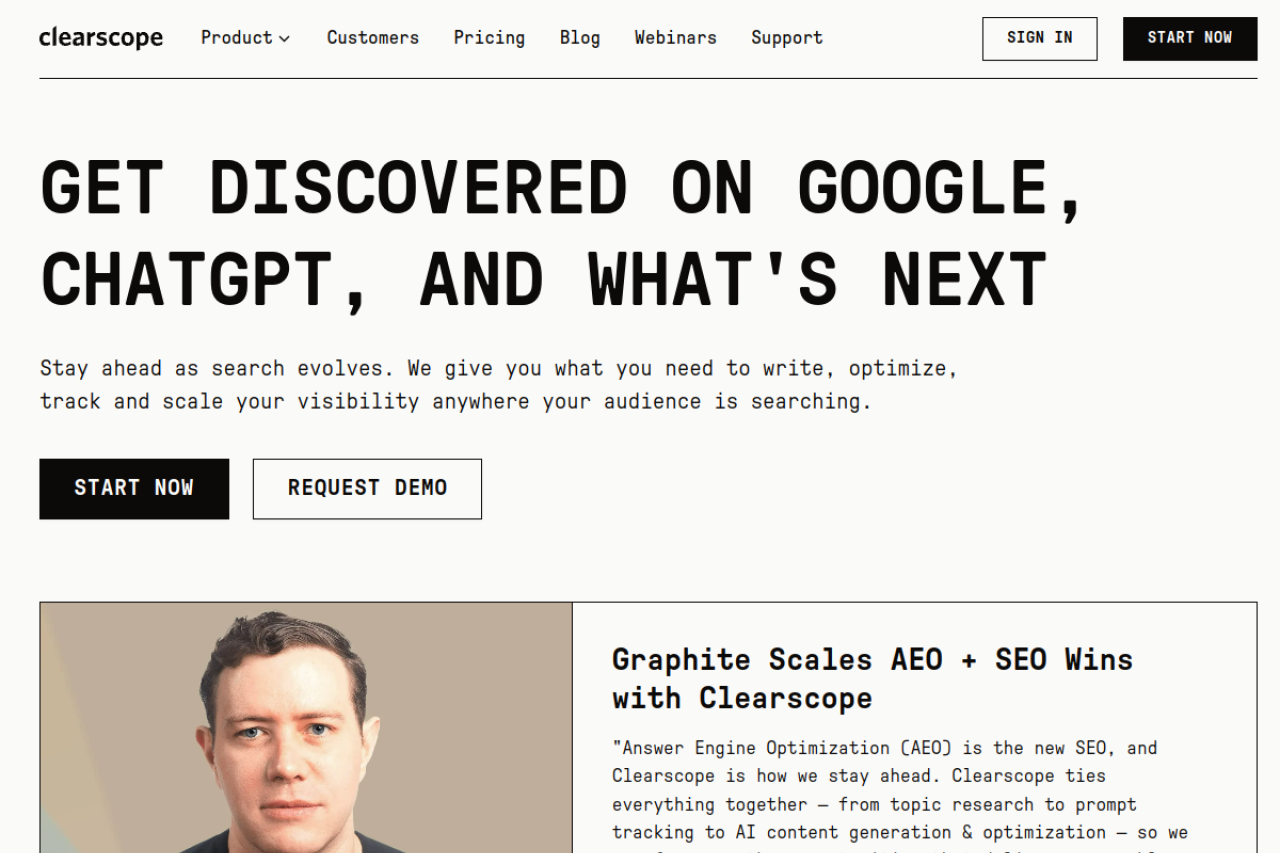
Clearscope grades content against competitor pages using NLP term recommendations. The editor is clean and simple, and it integrates with Google Docs and WordPress.
Writers like it because it stays out of the way. You draft, it grades, you tighten. No clutter, no distraction.
Best for: content teams who write their own drafts and want a reliable optimization layer on top.
Limitation: Clearscope has no AI-citation tracking, no publishing workflow, and no content gap finder built in. It optimizes, but it does not tell you what to write next or whether AI answers surface you.
Frase, best for research-driven content briefs

Frase pulls SERP data and competitor outlines to build briefs fast. If your writers need direction before they type a word, Frase gives it.
It offers dual SEO plus GEO scoring, which evaluates alignment with both Google and AI answer engines. That makes it a solid pick for teams thinking about AI search visibility early.
Best for: teams who want stronger briefs and topical coverage before the writing starts.
Limitation: the workflow is brief-heavy. Publishing and full citation tracking still require separate tools, so you leave the platform to measure results.
Jasper, best for high-volume brand-voice content at scale
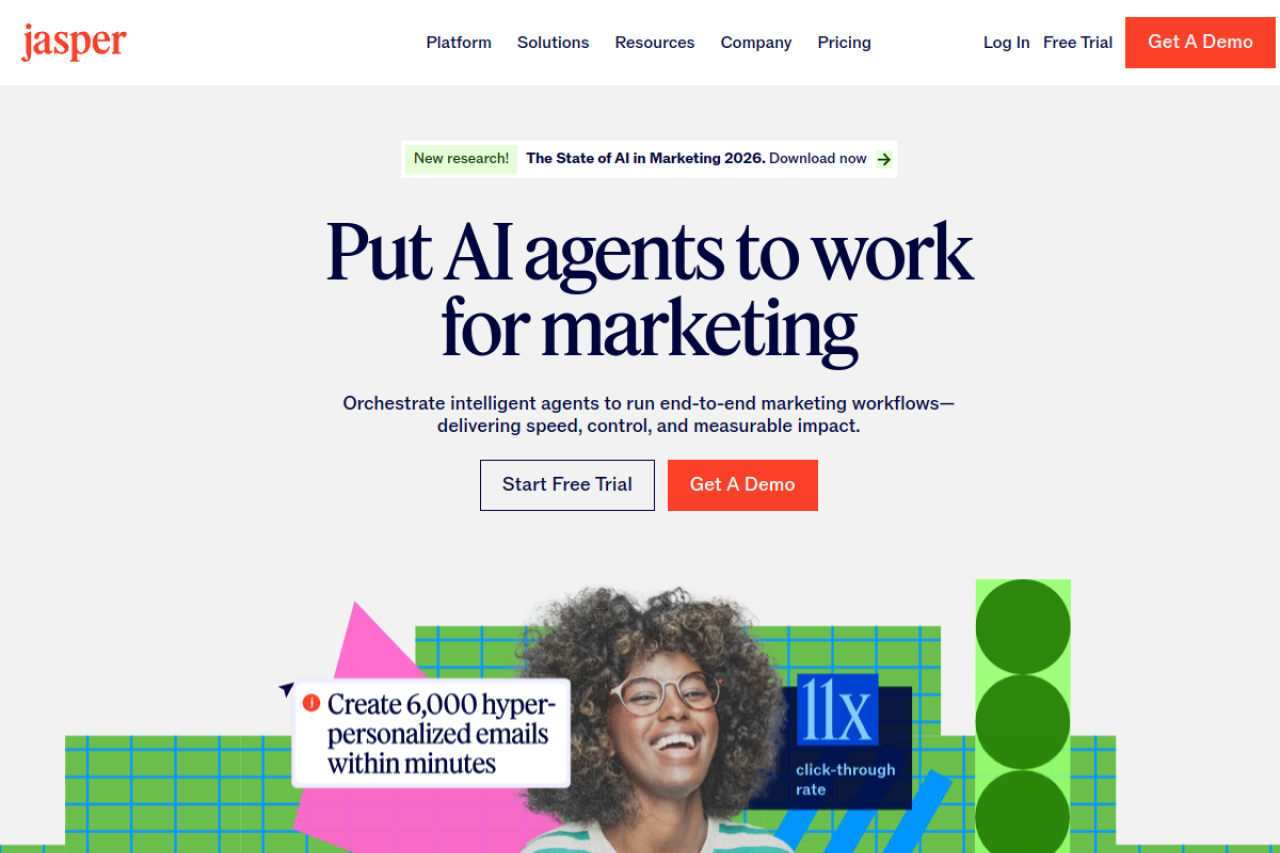
Jasper trains on your brand voice so large teams produce consistent copy across formats. Its template library covers blogs, ads, social, and email in one workspace.
If your job is volume across many channels, Jasper moves fast. Marketing teams scaling output past SEO articles alone tend to favor it.
Best for: marketing teams producing high volumes across many formats, not just search content.
Limitation: Jasper has no built-in keyword rank tracking, no AI-citation monitoring, and no gap analysis. It writes at scale, but the measurement and strategy live elsewhere.
ChatGPT with SEO plugins or custom prompts, best for beginners on a tight budget

ChatGPT is the lowest-cost entry point for drafting SEO content with manual prompting. It handles outlines, meta descriptions, and quick rewrites without a subscription stack.
For solo founders and early teams, it is flexible and cheap. You test AI writing before committing to a platform, and that is a smart first move.
Best for: solo founders or early-stage teams testing AI writing on a tight budget.
Limitation: ChatGPT has no SEO scoring, no citation tracking, and no publishing integration. Every step is manual, which eats the time you saved on the draft. It is a fine start, not a system.
How to match the right tool to your actual use case
Start with your biggest bottleneck. Is it writing speed, SEO scoring, citation tracking, or all three? Name it before you buy anything.
Budget-constrained and beginner teams should start with ChatGPT or Frase, then graduate. You learn the workflow cheaply, then move up when volume or reporting demands more.
Content teams that need Google-ranking guidance fit Surfer SEO or Clearscope well. Both add a solid optimization layer if you already have writers producing drafts.
Teams that must win and measure AI citations, not just write, need a platform that tracks across models. Writing without measurement is the gap most tools leave open, and it is the one that costs you.
Now count the tools you already pay for. One writes, one tracks citations, one pulls Search Console data. Fragmented stacks usually cost more than one platform once you add the subscriptions and the switching time.
Here is the red flag. Any tool that writes content but has no way to prove whether it earns citations is selling you output, not outcomes. Watch for these signals when you evaluate AI SEO tools.
| Tool | Best for | AI citation tracking | Publishing built in |
|---|---|---|---|
| Rankblocks | Full-workflow AEO plus SEO | Yes | Yes |
| Surfer SEO | Real-time on-page scoring | No | No |
| Clearscope | Optimizing human drafts | No | No |
| Frase | Research-driven briefs | Partial | No |
| Jasper | High-volume brand voice | No | No |
| ChatGPT | Budget beginners | No | No |
What makes an AEO-optimized article different from a standard SEO post
A standard SEO post targets keywords and page authority. An AEO-optimized article targets the questions AI models actually answer. That shift changes how you write.
AEO puts the answer first. You lead with a direct, citable statement, then add supporting detail. Models extract that clean answer and cite you, instead of skipping past a slow intro.
Structure does the heavy lifting. Schema markup, clear entity signals, and question-and-answer formatting help AI pull your content into an answer. Learn how to optimize content for these surfaces and you win both.
AEO and classic SEO reinforce each other. Authoritative, well-structured content ranks in Google and earns AI mentions from the same page. You write once and win on two surfaces. Data backs this up: brands cited in AI Overviews earn 35% more organic clicks than uncited brands on the same query.
The metric shift matters most. You track citations and brand mentions in AI answers alongside keyword positions and clicks. If your tool cannot show the first two, half your visibility stays invisible.
Pick the tool that proves results, not just publishes words
The real question is not "can it write?" Everything writes now. The question is "can it show me what the writing won?"
Rankblocks closes that loop. It goes from gap discovery to publishing in your brand voice, then tracks AI citations across ChatGPT, Perplexity, Claude, and Gemini, and measures your keyword rankings alongside them. No agency retainer, no fragmented stack.
That single-platform approach is the difference. The AI Visibility Monitor shows exactly which buying questions surface your brand versus a competitor, and the Content Gap Analysis makes sure every article targets real demand.
Teams that track AI citations next to keyword ranks report results faster and cut spend on dead content. Start with the use case you need most, then expand as you grow.
Want to see whether ChatGPT already mentions your brand? Run a free audit and find out in minutes.
Frequently asked questions about the best AI tool for SEO content writing
Which AI tool is best for writing content that wins citations in ChatGPT and Perplexity?
Rankblocks is built for this specific job. Its AI Content Writing Engine writes content structured to earn citations, and its AI Visibility Monitor tracks whether those citations appear across ChatGPT, Perplexity, Claude, and Gemini. Most writing tools generate text but never show you if AI answers surface it.
Can one platform handle SEO content writing and AI-visibility tracking together?
Yes. Rankblocks combines writing, publishing, content gap analysis, keyword rank tracking, and AI-citation monitoring in one platform. Most competitors force you to pair a writing tool with a separate visibility tracker, which raises cost and slows reporting. One workflow keeps research, publishing, and proof in the same place.
What separates an AEO-optimized article from a standard AI-written SEO post?
An AEO-optimized article answers questions directly and uses clear structure so AI models can extract and cite it. A standard AI-written SEO post targets keywords for Google rankings but often buries the answer. AEO content wins both surfaces because the same authoritative structure ranks in Google and earns AI mentions.
How do I choose the best AI SEO content writing tool for a small team or solo founder?
Start with your budget and biggest bottleneck. Solo founders on a tight budget can begin with ChatGPT for cheap drafting, then graduate to a full platform once they need scoring, publishing, and citation tracking. Small teams that need proof of results should skip fragmented tools and pick one platform that measures rankings and AI citations together.
Do AI writing tools for SEO also track Google keyword rankings and Search Console data?
Some do, most do not. Pure writing tools like Jasper and ChatGPT have no rank tracking or Search Console integration. Rankblocks includes a Keyword Rank Tracker and a Live Search Console Dashboard, so you see clicks, impressions, positions, and keywords one step from the top without digging through a raw dashboard.